Чому вимерли динозаври?
Бо близько 66 мільйонів років тому на Землю впав астероїд, величезний камінь із космосу. Стало темно й холодно, їжі забракло, і з усіх динозаврів вижили тільки птахи. 1,2,3
Про кого це
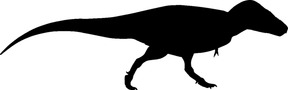

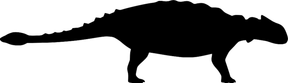
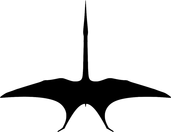


Що сталося
- Учені думають, що астероїд був завширшки від 10 до 20 кілометрів. 4,5,6,7
- Він упав там, де тепер Мексика. 1,8
- По морях побігли величезні хвилі. Учені розрахували, що за два дні вони обійшли всю Землю. 9
- Пил і сажа затулили Сонце, і стало темно й холодно. За різними розрахунками, темрява могла тривати місяці чи роки, а холод ще довше. 2,10,7
- Рослинам бракувало світла, щоб рости, і їжі стало мало. 2,11
Хто вимер і хто вижив
- Вимерли всі динозаври, крім птахів. Тиранозавр, трицератопс і анкілозавр були серед останніх. 3,12,13,14
- Зникли й летючі ящери, як-от кетцалькоатль, і великі морські ящери, як-от мозазавр. 3,15,16,17
- Вижили деякі птахи. Від них походять усі сьогоднішні птахи, і курка теж. 18
- Вижили також маленькі звірята, крокодили, черепахи, жаби, акули й багато риб. 19,20,21
- Учені думають, що маленьким тваринам легше було сховатися від жару в норі чи у воді. 20
Як учені це з'ясували
- У каменях у різних куточках світу є тонкий шар глини. У ньому багато іридію, металу, якого мало в земній корі, але значно більше в метеоритах, каменях із космосу. 22
- У цьому шарі є піщинки, пом'яті страшним ударом, і крихітні скляні кульки з розплавленого каменю. 23,8,24
- Сам кратер помітили, коли шукали нафту в Мексиці. Потім учені зрозуміли, що це і є слід того удару. 19,8,25
- У 2016 році вчені пробурили кратер і дістали звідти каміння з глибини. 26
Ще запитання
Для дорослих
Коли. За аргон-аргоновим датуванням (Renne et al. 2013) межа крейди й палеогену має вік 66,043 ± 0,043 млн років з урахуванням систематичних похибок, а удар і вимирання збігаються з точністю до 32 тисяч років. Уран-свинцеве датування (Clyde et al. 2016) дає 66,021 ± 0,024 / 0,039 / 0,081 млн років залежно від урахованих похибок; з повними похибками оцінки перекриваються. Шкала ICS округлює межу до 66,0 млн років. 1,27,28
Чи динозаври вже занепадали? Sakamoto et al. (2016) за філогенетичними темпами вважають, що нові види з'являлися повільніше, ніж зникали, ще за десятки мільйонів років до удару. Brusatte et al. (2015) глобального спаду не бачать, хоч деякі групи рослиноїдних у Північній Америці скоротилися. Саме зникнення збігається з ударом. 29,30
Масштаб вимирання. Зникло близько 75% видів (NASA; 76% у Lowery et al. 2018); це наближена оцінка за неповним літописом (Marshall 2023). Серед груп, що вижили, втрати теж великі: зникли архаїчні групи птахів (Longrich et al. 2011), у вибірці ссавців Північної Америки вижили 4 види з 59 (Longrich et al. 2016), у північноамериканській вибірці ящірок і змій зникло близько 83% видів (Longrich et al. 2012). 31,32,33,34,35,36
Звідки ми це знаємо
- Renne et al. (2013). Time scales of critical events around the Cretaceous-Paleogene boundary
- Senel et al. (2023). Chicxulub impact winter sustained by fine silicate dust
- Rae & Hendry. What killed the dinosaurs?
- Vellekoop et al. (2014). Rapid short-term cooling following the Chicxulub impact at the Cretaceous-Paleogene boundary
- Artemieva et al. (2017). Quantifying the release of climate-active gases by large meteorite impacts with a case study of Chicxulub
- Collins et al. (2020). A steeply-inclined trajectory for the Chicxulub impact
- Brugger et al. (2017). Baby, it's cold outside: Climate model simulations of the effects of the asteroid impact at the end of the Cretaceous
- Hildebrand et al. (1991). Chicxulub Crater: A possible Cretaceous/Tertiary boundary impact crater on the Yucatán Peninsula, Mexico
- Range et al. (2022). The Chicxulub impact produced a powerful global tsunami
- Bardeen et al. (2017). On transient climate change at the Cretaceous-Paleogene boundary due to atmospheric soot injections
- Henehan et al. (2019). Rapid ocean acidification and protracted Earth system recovery followed the end-Cretaceous Chicxulub impact
- Natural History Museum, London. Tyrannosaurus
- Natural History Museum, London. Triceratops
- Natural History Museum, London. Ankylosaurus
- Natural History Museum, London. Pterosaurs: The truth about these 'flying dinosaurs'
- Texas Science & Natural History Museum, University of Texas at Austin. Texas Titans
- Voiculescu-Holvad et al. (2026). Mosasaur remains from the Maastrichtian of Denmark: implications for the diversity, ecology, and demise of a clade (Squamata: Mosasauridae)
- Field et al. (2018). Early evolution of modern birds structured by global forest collapse at the end-Cretaceous mass extinction
- Carroll. The Day the Mesozoic Died (teaching adaptation of Into the Jungle, 2008)
- Robertson et al. (2004). Survival in the first hours of the Cenozoic
- Sibert & Norris (2015). New Age of Fishes initiated by the Cretaceous-Paleogene mass extinction
- Alvarez et al. (1980). Extraterrestrial cause for the Cretaceous-Tertiary extinction
- Bohor et al. (1984). Mineralogic evidence for an impact event at the Cretaceous-Tertiary boundary
- Goderis et al. (2021). Globally distributed iridium layer preserved within the Chicxulub impact structure
- Schulte et al. (2010). The Chicxulub asteroid impact and mass extinction at the Cretaceous-Paleogene boundary
- Morgan et al. (2016). The formation of peak rings in large impact craters
- Clyde et al. (2016). Direct high-precision U-Pb geochronology of the end-Cretaceous extinction and calibration of Paleocene astronomical timescales
- International Commission on Stratigraphy. International Chronostratigraphic Chart, version 2026/06
- Sakamoto et al. (2016). Dinosaurs in decline tens of millions of years before their final extinction
- Brusatte et al. (2015). The extinction of the dinosaurs
- NASA Scientific Visualization Studio. Expedition 364 to the Chicxulub Impact Crater
- Lowery et al. (2018). Rapid recovery of life at ground zero of the end-Cretaceous mass extinction
- Marshall (2023). Forty years later: The status of the Big Five mass extinctions
- Longrich et al. (2011). Mass extinction of birds at the Cretaceous-Paleogene (K-Pg) boundary
- Longrich et al. (2016). Severe extinction and rapid recovery of mammals across the Cretaceous-Palaeogene boundary, and the effects of rarity on patterns of extinction and recovery
- Longrich et al. (2012). Mass extinction of lizards and snakes at the Cretaceous-Paleogene boundary
Ми анонімно рахуємо відвідування, без cookies.